PixelPals Haven
Opening the next view…
Preparing the page without changing your saved work.
 Gear intelligence for complete setups
PixelPals Haven
Preparing the page without changing your saved work.
Sim Racing
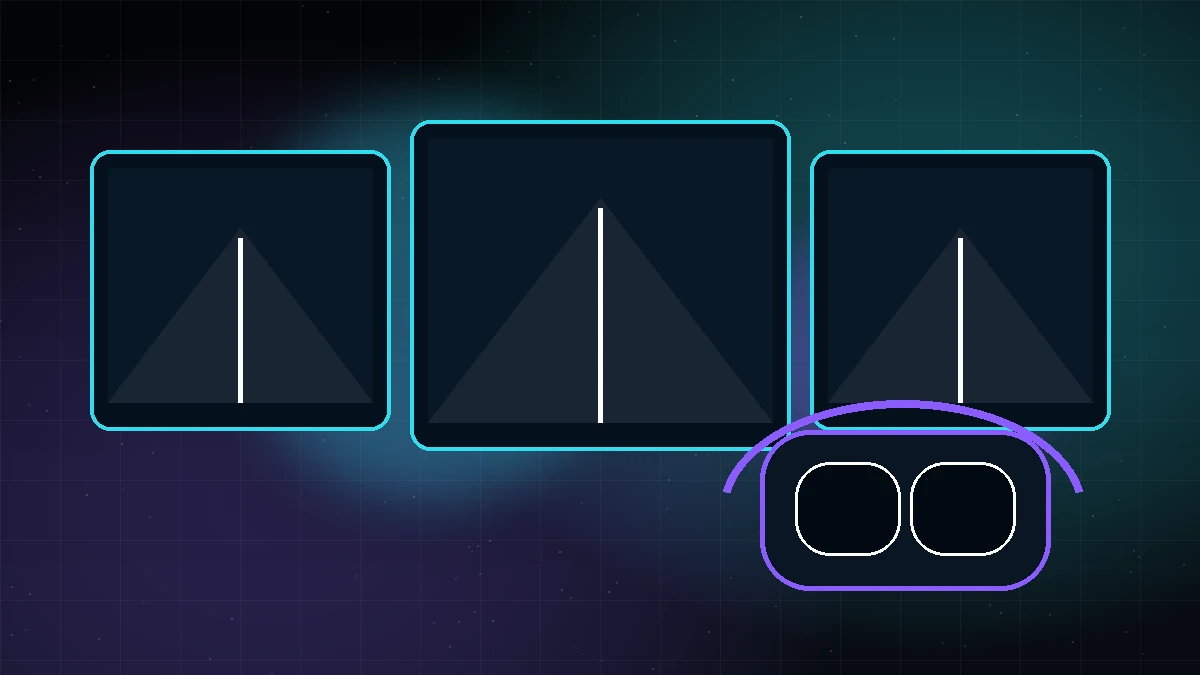
A single monitor, ultrawide, triple-screen array and VR headset solve the visibility problem in different ways. The right choice depends on field of view, image clarity, graphics performance, comfort, room layout and how easily the system must work every time.
Decide before buying
Start with platform, mounting, room and the driving problem you want to solve. The product list becomes shorter once those limits are clear.
Car type, seating position and competition goals determine how much side visibility matters.
More pixels, projections and VR resolution increase graphics demand. Evaluate frame-time consistency, not only an average frame rate.
Triples require width, stands and alignment. VR reduces the display footprint but adds headset, cable or wireless-link requirements.
Clarity, heat, weight, eye comfort, motion sensitivity and the need to see physical controls affect long-session suitability.
A simulator can calculate a realistic field of view from screen size, viewing distance, bezel width and monitor angle. A wider-than-correct view may show more of the cockpit but can distort scale and perceived speed.
The center and side screens should be positioned and angled consistently, then configured with the simulator's multi-projection options where available. The graphics system must render a much wider total resolution, so test performance at the intended settings.
An ultrawide avoids bezels and the alignment work of triples, but it cannot wrap as far around the driver. Screen curvature, viewing distance and available vertical resolution determine how natural the image feels.
VR provides natural head movement and strong depth cues, but image clarity, frame-time stability, headset comfort and connection quality matter. Wired PC VR also requires a suitable high-quality USB data path when the headset uses a link cable.
A compatible variable-refresh display can adjust refresh timing to the graphics output within its supported range. Certification and measured behavior are more useful than a generic compatibility label.
Primary references
These references support technical statements on this page. They are not affiliate links.
Related reading