PixelPals Haven
Opening the next view…
Preparing the page without changing your saved work.
 Gear intelligence for complete setups
PixelPals Haven
Preparing the page without changing your saved work.
Creator audio setup guide
Follow the voice from the room to the recording. Every connection, gain stage and monitoring point is an opportunity to improve the result—or lose it.
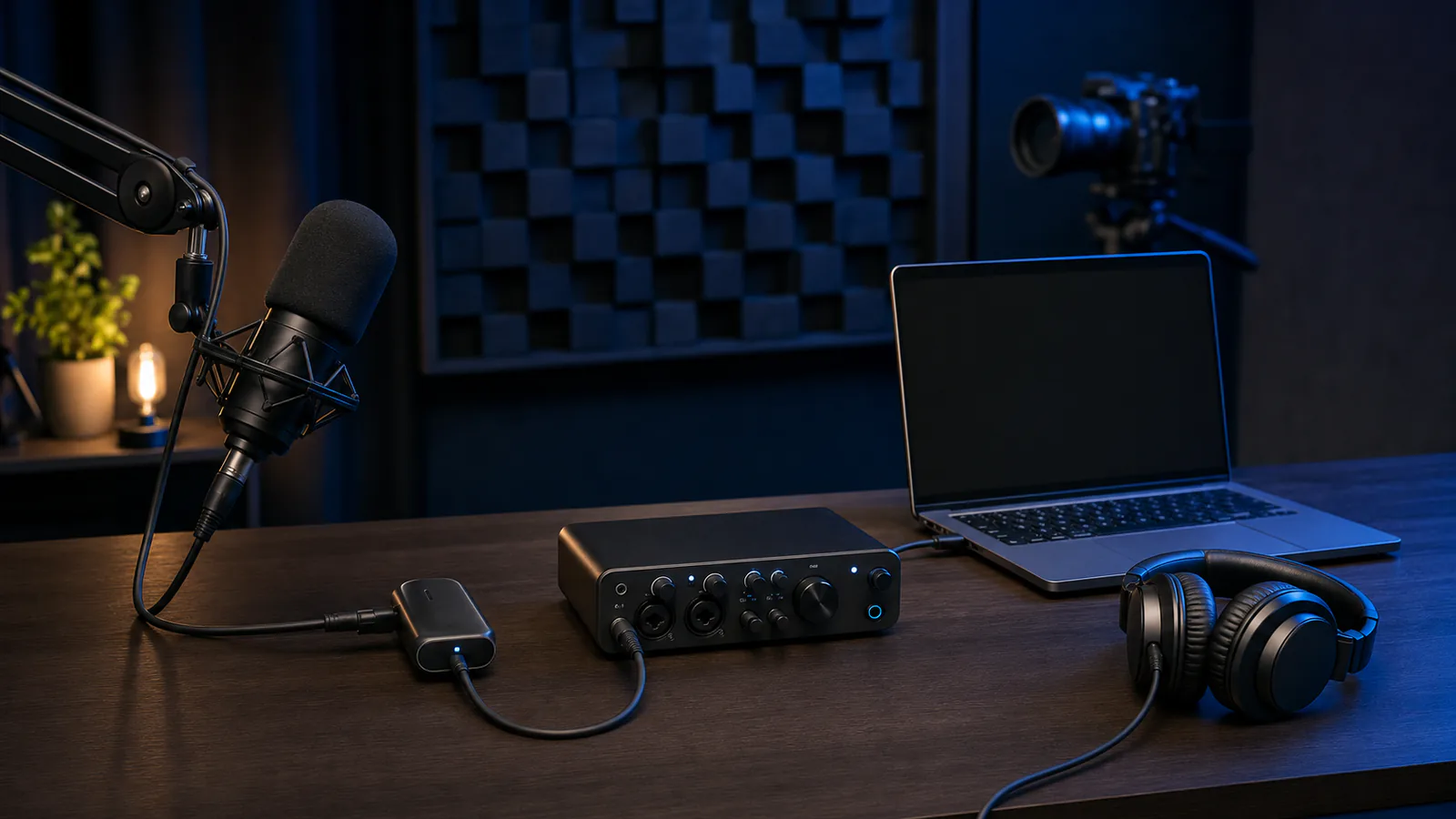
Move away from fans, hard reflective walls, traffic and computer noise when possible. Place the microphone close enough to the speaker that the voice is clearly louder than the room. Acoustic treatment can help, but placement and environment come first.
A lavalier keeps a consistent distance while a person moves. A desk microphone is easy to monitor but stays in frame. A boom microphone can remain unseen, but it needs support and careful positioning. Choose the method that can stay close to the voice throughout the recording.
Write the entire path: transmitter to receiver, receiver to camera, USB microphone to computer, or XLR microphone to interface. Confirm connector type, cable direction, required adapters and whether the input expects microphone or line level. Avoid unnecessary adapters when a receiver made for the device is available.
Ask the speaker to deliver the loudest realistic line and leave headroom. Gain that is too high clips; gain that is too low can make noise more obvious after amplification. Check both the receiver or interface and the final recording device so one stage is not overdriving the next.
Listening at the interface is useful, but the camera or computer file is the result. Monitor the final device when possible, then record and replay a short test. Confirm that both speakers are present, channels are routed correctly and no software is using the wrong input.
Secure a lavalier so fabric cannot scrape the capsule or cable. Outdoors, fit the correct wind protection before the test. Noise reduction can assist, but it cannot reconstruct speech destroyed by wind or clipping.
A casual desk recording may only need a quick test. A one-time interview may justify a second recorder or wired backup. The backup must be independent enough that the same dead battery, bad cable or software setting cannot erase both tracks.
Published July 17, 2026.